
Let go.
One breath at a time.
When you release your grip on the body, the thoughts, and the feelings that keep looping in your head, something shifts. That space you enter? That’s meditation.
Meditation isn’t about forcing calm or chasing silence. It’s a gentle process that guides you inward and helps you release what you’ve been holding, sometimes without even realizing it. Over time, this practice becomes a way of discovering yourself again. Not the version shaped by stress or fear, but the one that feels steady and real.
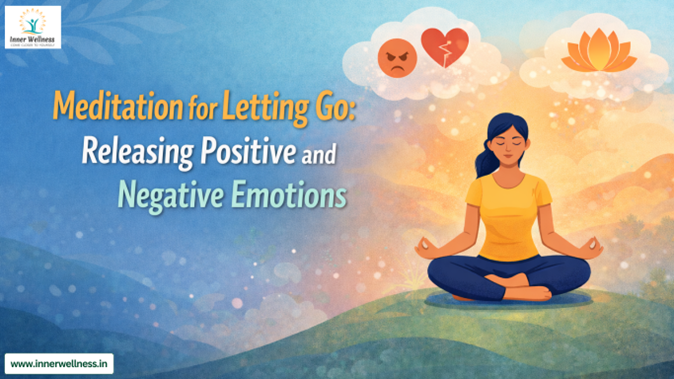
When you sit down to meditate, it’s completely natural for thoughts, emotions, memories, and even discomfort to show up. That doesn’t mean you’re doing it wrong. It means you’re present. Instead of pushing these experiences away, allow them. Don’t judge them. Don’t cling to them either. Let them pass, the way clouds move across the sky, and gently bring your attention back to your breath.
That simple return is where release begins.
The Practice of Letting Go
Today, meditation invites us into the practice of letting go. Letting go of tension in the body. Letting go of emotional weight. Letting go of old conflicts that still live quietly inside us.
This form of meditation teaches surrender. Not giving up, but softening. Being here. Being now. Because the present moment is the only place where healing actually happens.
People who learn meditation often discover that the real work isn’t controlling the mind. It’s learning how to stay with what arises without getting lost in it. That skill doesn’t just help during meditation. It changes how you move through life.
Preparing Yourself for the Practice
Find a Quiet Space
Choose a place where you won’t be disturbed. Sit comfortably. Keep your spine straight but your body relaxed. There’s no need to force posture. Let your body feel supported.
Before you begin, take a moment to notice what’s been weighing on you. Anxiety. Restlessness. Emotional fatigue. If it helps, write these thoughts down. Not to analyze them, but to acknowledge them. Awareness is the first step toward release.
Many mindfulness and meditation courses begin exactly here. With honesty. With presence.
Connect With Your Breath
Now, gently close your eyes.
Bring your attention to the breath moving through your nostrils. In. Out. Slow and unforced. There’s no need to control it. Just stay with it.
Each inhale creates space.
Each exhale releases something old.
Let your breath carry away the tension you’ve been holding in your shoulders, your chest, your jaw. Let sadness dissolve without trying to fix it. Breathing is the simplest and most powerful tool we have to let go. There’s nowhere to rush. Nowhere else to be.
This is why those who learn meditation are often taught to return to the breath again and again. It’s always available. Always grounding.
Acknowledging What You Feel
As your breathing settles, emotions may rise. Anger. Fear. Grief. Maybe a memory involving a colleague, a friend, or someone close to you.
Instead of asking why it’s there, ask yourself something softer.
What am I holding onto?
Often, beneath anger lives fear. Fear of losing control. Fear of being unseen. Fear of being alone. With each breath, allow these feelings to surface and then gently release them. You don’t need to push them away. You don’t need to dramatize them either.
If tears come, let them come. If emotions shift, let them shift.
This is emotional release, not emotional suppression.
Experienced guides in meditation teachers training often emphasize this point. Healing happens when emotions are allowed to move through, not when they’re blocked.
Let acceptance empower you.
Let tension loosen its grip.
Let compassion lead you back to yourself.
Be kind. Be patient. Healing doesn’t rush.
Returning to the Present Moment
As emotions settle, bring your awareness back to the now. Feel the lightness inside you. Feel the quiet strength that remains when fear and tension soften.
Let gratitude arise, not as a forced thought, but as a natural response to being here, breathing, alive.
This is the heart of meditation.
Not escape.
Not perfection.
But presence.
Whether someone is new to meditation or exploring deeper paths through mindfulness and meditation courses or meditation teachers training, this practice remains the same. Return. Release. Breathe.
Letting go is powerful, but it takes time. Memories don’t dissolve overnight. Emotions don’t disappear on command. And that’s okay.
With consistent practice, freedom grows quietly. Peace becomes familiar. And life begins to feel less heavy.
One breath at a time.
One release at a time.
That’s how meditation transforms us.